- Production
- PRINT IT!
- Day
- 1
- Date
- Time
- 14:35 ET
- Gate
- A fight against three extras feels good, and a packaged build runs
Day 1, part 2 of 3: The cast arrives
Eight characters went from generated models to rigged Unreal actors whose clothes move. Their faces didn't pass review, so they're paused. The sets went back to the drawing board, and the score arrived in stems.
Part 2 of 3 for Thursday: the cast, from concept to Unreal, and what came in around it.
Choosing the star
While the first playable was being built, the art started in parallel. From 04:35 ET, ChatGPT’s image generation drew the concept rounds: an African American cast in their own 1970s streetwear, on a film set that is visibly cheap. I picked the red-jacket lead.
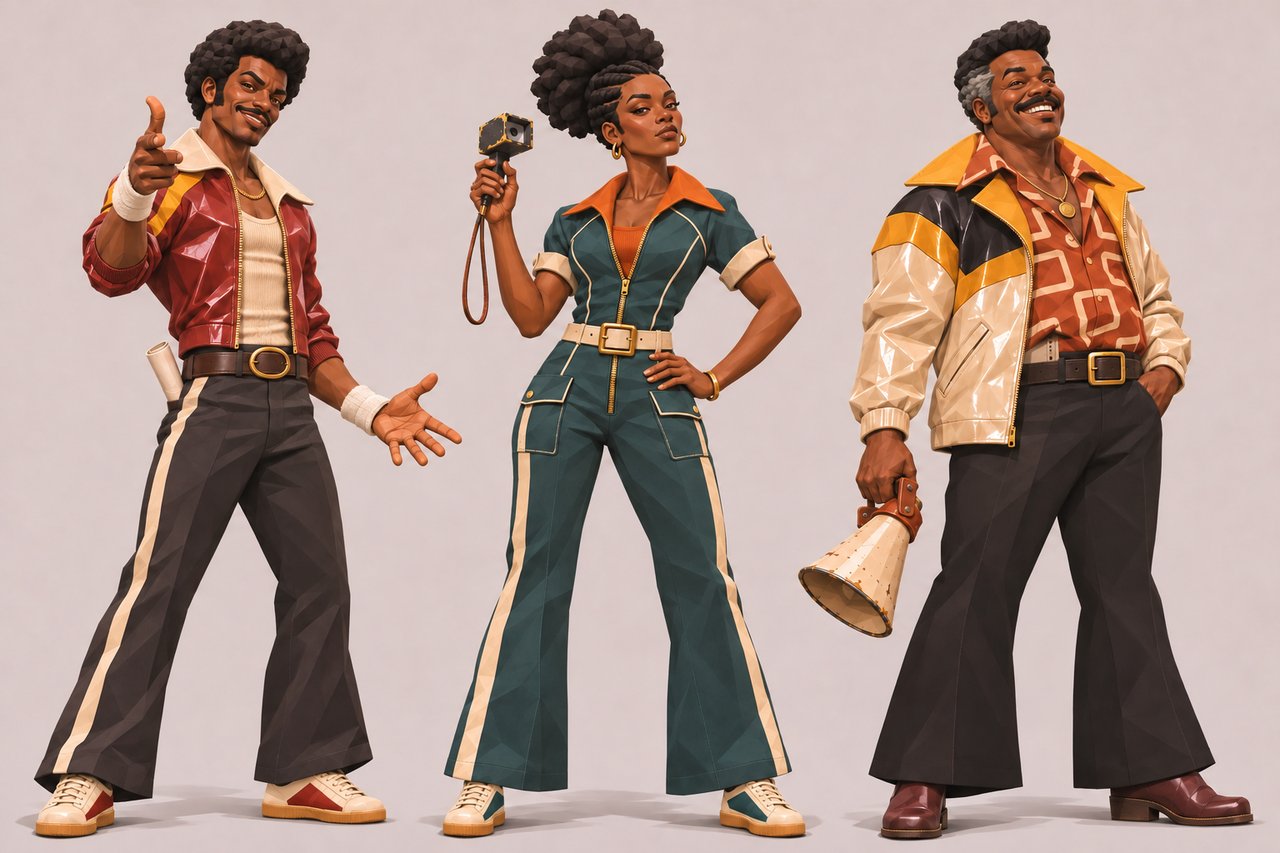
From those concepts and four-view sheets, I generated the models in Tripo: the star at 05:47 ET, the co-star, his stunt double and a crew member by 08:27, and four extras by 10:39.
From model to Unreal
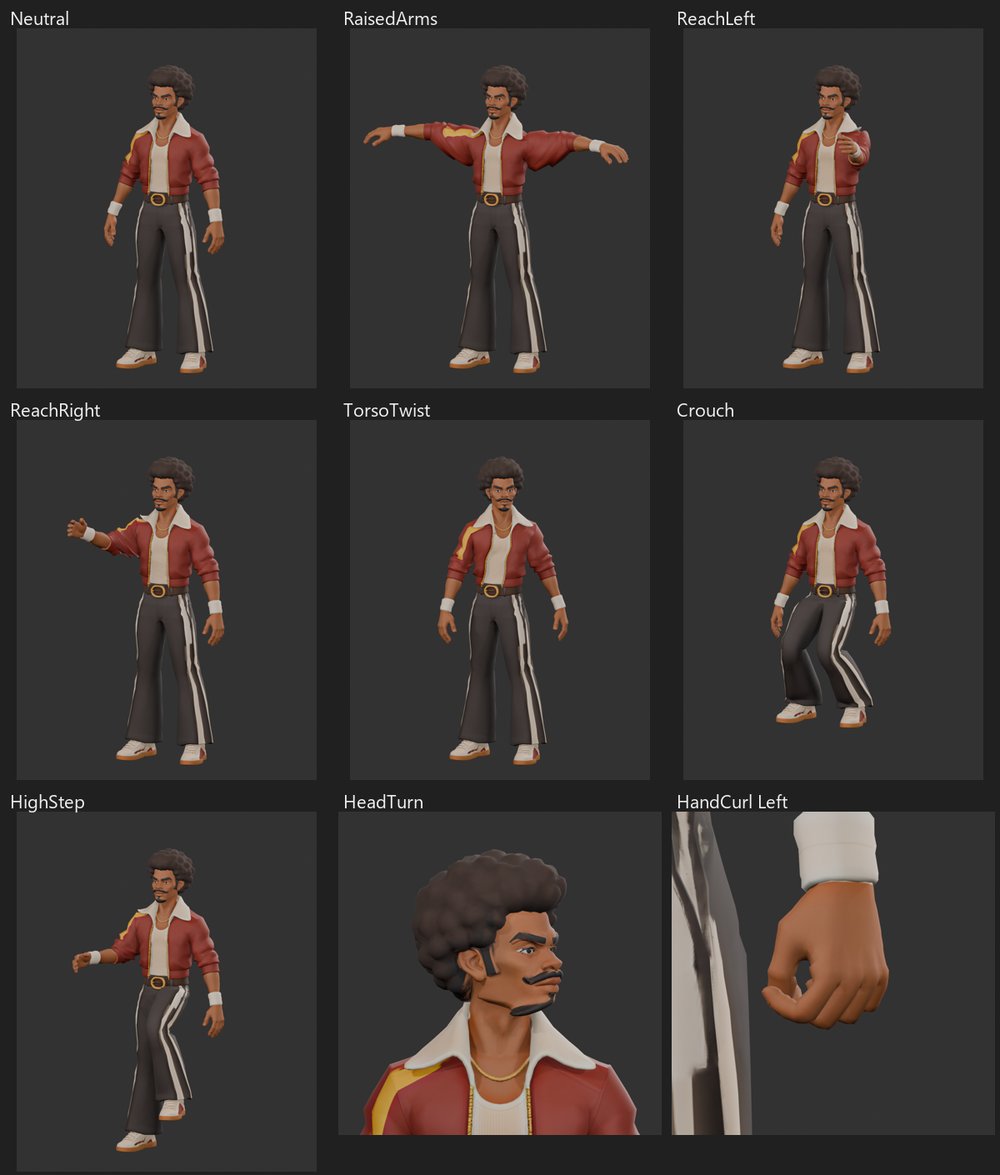
A second agent, OpenAI’s Codex, took each model through Blender into Unreal, working from scripts and checks rather than by hand.
- Original detail kept. No decimating, smoothing or remeshing of the heads, and the original 4096-pixel textures.
- A skeleton fitted to each body: 55 bones, plus the wrapper bone Unreal’s import adds.
- Collision bodies fitted from each character’s skin weights, for ragdolls later.
- Chaos cloth on the parts that should swing: jacket hems on the star, co-star and double, and trouser flares on the crew and extras. Shoulders, sleeves and upper legs stay pinned, and the swing is limited to 1 to 2 cm. It’s a first pass, not loose clothing.
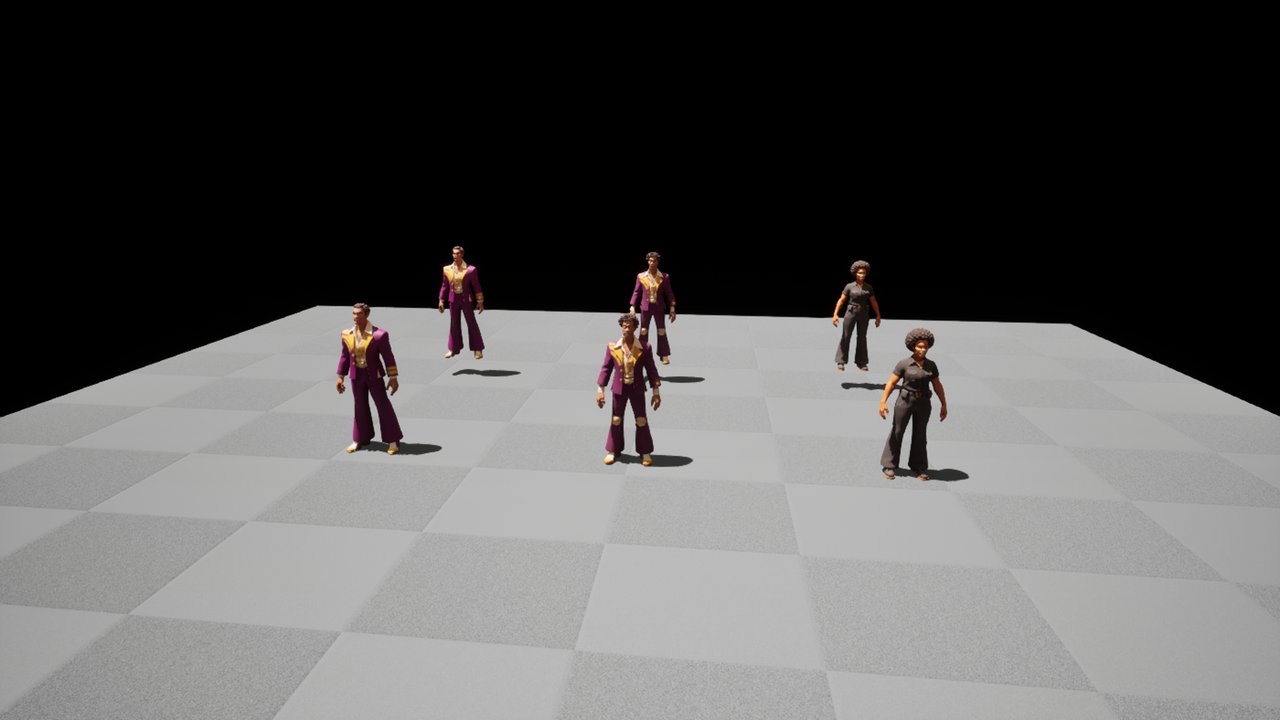
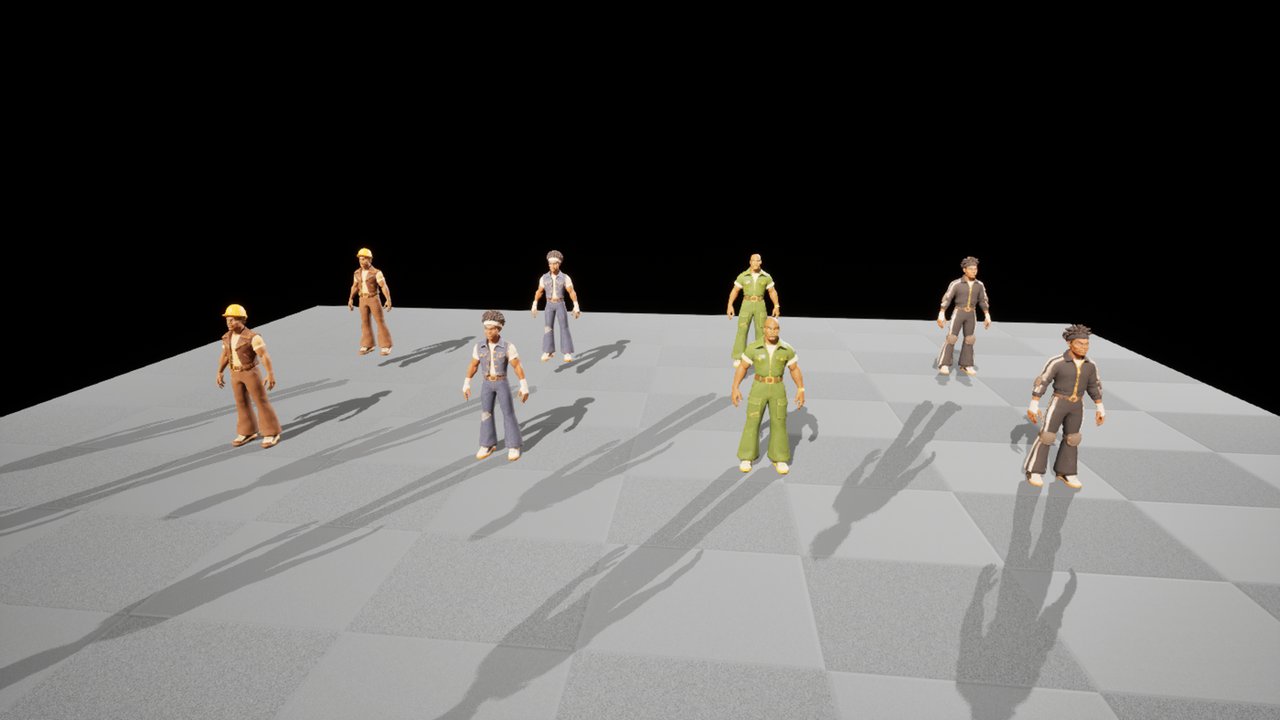
They landed in three commits: the star at 08:51 ET, the co-star, double and crew at 09:53, and the four extras at 12:37. The star stands 180 cm, the co-star 185, the crew 172, and everyone else 180.
Tested before trusted
Each character got a 12-second test in the editor. Its body dropped 30 cm and took a shove. A second copy, with its cloth on, swayed 8 cm and turned 6 degrees once a second for 3 seconds. To pass, everything had to settle to under 10 cm a second and 15 degrees a second in the final second. In the latest runs, all eight measured zero.
What broke
- The star came in a hundred times too big, from a scale on the wrapper bone. The fix bakes centimetres into the mesh and the bones and leaves every scale at 1.
- The damping reached one body in each ragdoll. The setting was applied to the component, which only reached the root body, so 47 bodies were still undamped. It’s now set on every body.
- The extras wouldn’t settle, and making the damping stronger made it worse: the brawler went from 31.78 to 109.27 degrees a second. The real cause was the clock. Physics was capped at 1/30 of a second per editor frame, while each frame took about 100 ms, so the world ran ahead of the physics. The damping change was undone, and physics now takes steps of 1/120 of a second, up to 16 a frame. All four passed, and so did the rerun of the first four.
- Exporting with skin weights crashed the editor, so those diagnostic exports go out without them.
- The faces. Each character has 17 starter expressions. With the jaw open and a smile, background showed through the corners of the mouth. A dark background hid it, and only a bright magenta one showed it. One fix passed the automated check but left a dark flap you could see, so it was rejected. A passing check doesn’t excuse a visible flaw. At 12:53 ET I paused the facial work to come back to later, and the fighters keep neutral faces for now.
The sets, take two
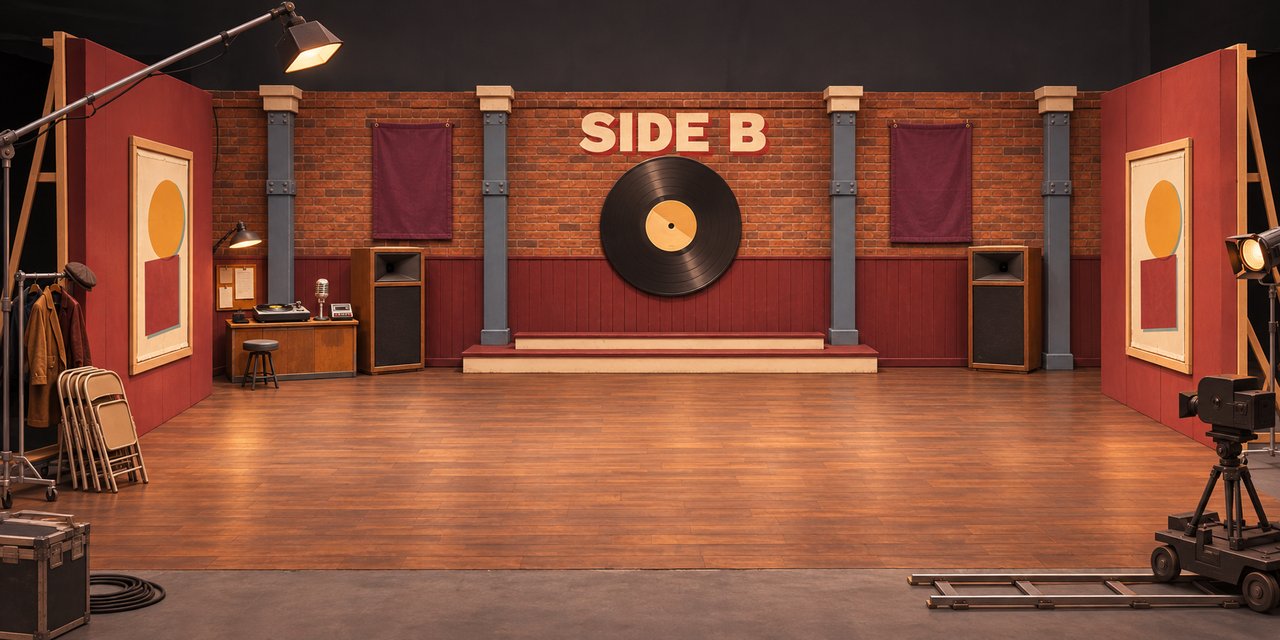
The first set concepts didn’t fit the world I want, so I rejected them. The second pass is an urban neighbourhood, built as a cheap film set, from four screenshots of the game’s greybox stages: a corner diner, a repair shop’s loading court under an elevated train, and a community dance hall. They’re still proposals, and none are modelled yet.
Moves and music
- Eleven more briefs from my old engine landed between 10:57 and 13:20 ET: sound and music, the studio’s butchered cut, the producer’s notes, cuts on the beat, commentary, the gym’s instant replay, moves from clips, retargeting, connecting the characters to the fight, framing rules, and hit boxes that fit the body. I made the calls on each.
- Five Fab animation packs are matched to the cast: a nimble kung fu set for the star and the stuntman, a Wing Chun set for the co-star and his double, and sets for the hammer, the axe and shield, and the brawler.
- The score is in, as stems. I made two tracks in Suno. “Fire in the Wires” for the stages has 12 stems and runs 4:12. “Boss Mode” for the finale has 11 stems and runs 3:35. Neither keeps a fixed tempo: the stage track drifts between 79.6 and 81.5 beats a minute, and the boss track between 139.4 and 143.5. But each stem comes with MIDI that marks every beat, so the Director’s Cut can still cut on the real beat.
Next
Every animation in those packs was made for a different skeleton, so the next job is retargeting: the star first, until he fights in the gym with his real body. Then the Director’s Cut plays back real bodies instead of shapes, and the score plays under the Dailies. Part 3 comes tonight.
Tools in this entryClaude CodeCodexChatGPTTripoBlenderUnreal Engine 5.9Suno